- Mon - Sat: 09:00 - 05:00

Type your paragraph here
Rahat Saleem provides legal guidance and representation for overseas Pakistanis facing property ownership, possession and land-record disputes in Rawalpindi and Pakistan.
Property problems can be difficult to manage from abroad, particularly where ownership records need verification, another person is occupying the property, documents appear inconsistent or legal proceedings are already underway.
Online consultations and electronic document review are available for overseas clients who need their property records assessed before taking further legal steps in Pakistan.
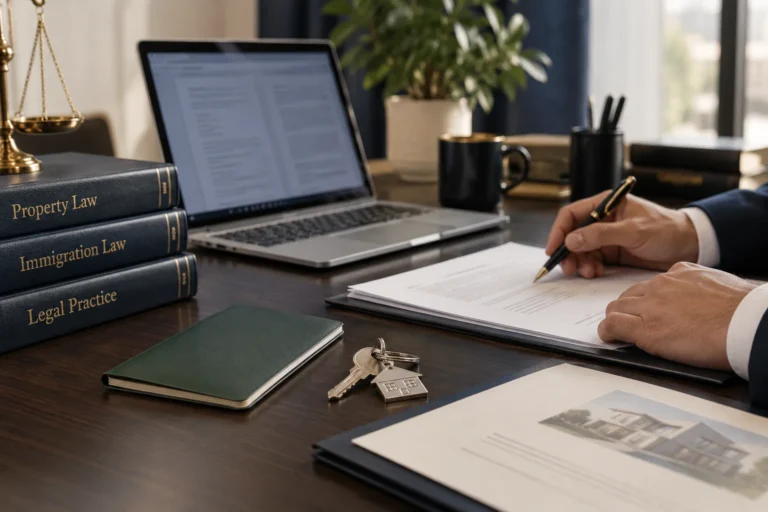
Overseas Pakistanis may own residential, commercial, agricultural or inherited property in Pakistan while living abroad.
A dispute may arise where another person claims ownership, remains in possession, disputes an inheritance, relies on conflicting documentation or interferes with the owner’s claimed rights.
Available title documents, Fard, registry, mutation and other property records are reviewed to understand the recorded ownership position.
The history of possession and circumstances of the current occupation are considered.
Property records and supporting documents can be reviewed electronically before further steps are taken in Pakistan.
Where appropriate, legal proceedings may be considered to protect or enforce property rights.
Every overseas property matter depends on the ownership history, available land records, possession and actions already taken by the parties.
Rahat Saleem reviews the available documents before advising on the appropriate legal course.
Available property and land records are reviewed to understand who is recorded as owner and what documents support the ownership claim.
Fard, registry, mutation and other relevant records may be examined according to the property involved.
The current occupation of the property and circumstances in which possession was obtained are considered.
Where a property right is disputed or threatened, appropriate legal proceedings may be considered according to the facts.
The appropriate approach depends on the property records, nature of the dispute and whether the overseas owner has already authorised anyone to act in Pakistan.
Discuss the property, ownership history, current issue and documents available.
Share available title documents, land records, agreements, notices and other relevant records for review.
Review Fard, registry, mutation and other available information relevant to ownership.
Assess who currently controls the property and whether another person asserts ownership, tenancy, inheritance or another right.
Determine whether the matter primarily concerns ownership, possession, inheritance, record correction, tenancy or another civil dispute.
Depending on the circumstances, further steps may include document verification, legal notice, authorised representation or civil proceedings in Pakistan.
The exact records required depend on the type of property and nature of the dispute.
Not every matter requires every document. The relevant records should be identified according to the facts of the particular dispute.
An overseas owner may discover that another person claims ownership of the same property or relies on a different transaction or record.
The complete documentary history should be reviewed before responding to a competing ownership claim.
Possession disputes can be particularly difficult for property owners who live outside Pakistan.
A person may be occupying the property without the authority claimed by the owner, or a person who previously had permission may later refuse to vacate.
Relevant issues may include:
Who owns the property
Who currently occupies it
How possession was originally obtained
Whether permission was given
Whether a tenancy existed
Whether the occupant now claims ownership
Whether notices have already been issued
Whether legal proceedings have begun
Ownership and possession should be assessed separately based on the available evidence.
An overseas Pakistani may acquire an interest in property through inheritance.
Disputes may arise regarding:
Identification of legal heirs
Shares in inherited property
Inheritance mutation
Possession by another heir
Previous transfers
Sale or use of jointly inherited property
Missing or inconsistent family records
Death, family and land records may need to be reviewed together before the ownership position can be assessed.
Punjab Land Records Authority provides digital access to a number of land-record services.
PLRA currently states that overseas Pakistanis may verify ownership, obtain Fard and access certain land-transaction services remotely through digital platforms and MOFA embassies.
A Fard contains information regarding the land, including ownership details, and PLRA provides an online Fard service.
Digital access can be useful for preliminary verification, but the legal significance of a record should be considered together with the underlying title documents and history of the property.
Different property records serve different purposes.
Shows information recorded in the land record
Includes ownership details
May assist with ownership verification
Can be obtained through PLRA services where available
Records a property-transfer transaction
Identifies the parties involved
Forms part of the property’s ownership history
Should be reviewed with subsequent land-record entries
Records changes in the revenue record
May arise from sale, inheritance, gift or another transaction
Helps trace changes in recorded ownership
Should be considered with the underlying documents
No single record should automatically be treated as resolving every ownership dispute without considering the facts and supporting documentation.
An overseas Pakistani may need to authorise a person in Pakistan to perform specific acts relating to a property matter.
A Special Power of Attorney may be relevant where an authorised representative is required for a particular legal or administrative step.
The document should clearly identify:
The overseas person granting authority
The appointed attorney
The property concerned
The specific acts being authorised
Any limitations on the authority
Relevant case or transaction details
The drafting, execution and
attestation requirements should be confirmed according to where the person is living and the purpose for which the document will be used.
An overseas owner should carefully consider the scope of any authority being granted.
Before signing a Power of Attorney, it is useful to review:
Identity of the proposed attorney
Exact property details
Purpose of the authority
Whether sale authority is actually necessary
Whether financial authority is required
Duration or limitations of the authority
Supporting property records
A Special Power of Attorney can be drafted narrowly where only specific actions are required.
If you learn from abroad that someone is claiming or occupying your property, important records should be collected before deciding on legal action.
These may include:
Current ownership record
Original title documents
Registry
Mutation history
Photographs or possession evidence
Agreements with the occupant
Previous Power of Attorney
Correspondence
Legal notices
Court documents
Information from family members or representatives in Pakistan
The appropriate response depends on what the records show.
Overseas property clients can begin by sharing their documents electronically for preliminary review.
The process may include:
Discuss the property, history and current dispute from abroad.
Provide scanned copies of the available property, identity and dispute-related records.
Review the documents and identify missing records, inconsistencies or legal issues requiring attention.
Receive guidance concerning what steps may be appropriate in Pakistan.
Whether further representation is required depends on the nature of the matter.
Guidance concerning registration of a Nikah through the relevant Nikah Registrar and local authority.
Document review and guidance where an overseas applicant may need to authorise a representative in Pakistan, subject to acceptance by the relevant authority.
Contact Rahat Saleem, Advocate High Court, for legal guidance concerning property ownership, possession disputes and related documentation in Pakistan.
Overseas Pakistanis can arrange an online consultation and provide available property records electronically for review before deciding on further legal steps.
Clients in Islamabad may also arrange a consultation at District Bar Rawalpindi.
Legally reviewed by Rahat Saleem, Advocate High Court
Advocate High Court | District Bar Rawalpindi
Civil & Property Law Services – Rawalpindi
This page provides general information concerning property matters involving overseas Pakistanis. It does not constitute legal advice for any particular property or dispute. Ownership rights, possession rights, land-record procedures, representation requirements and available remedies depend on the property, documents, jurisdiction, facts and applicable law.