- Mon - Sat: 09:00 - 05:00

Type your paragraph here
Rahat Saleem provides legal guidance and representation in disputes involving alleged illegal possession of property in Rawalpindi, based on ownership records, possession history and the circumstances of the matter.
Illegal possession disputes can arise where a person occupies, controls or refuses to vacate property despite another party claiming lawful ownership or a better right to possession.
The appropriate legal approach depends on the title documents, possession history, nature of the occupation and any agreements, transfers or court proceedings affecting the property.
Clients from Islamabad may arrange a consultation in Rawalpindi, while online document review is available for overseas Pakistanis dealing with possession disputes concerning property in Pakistan.
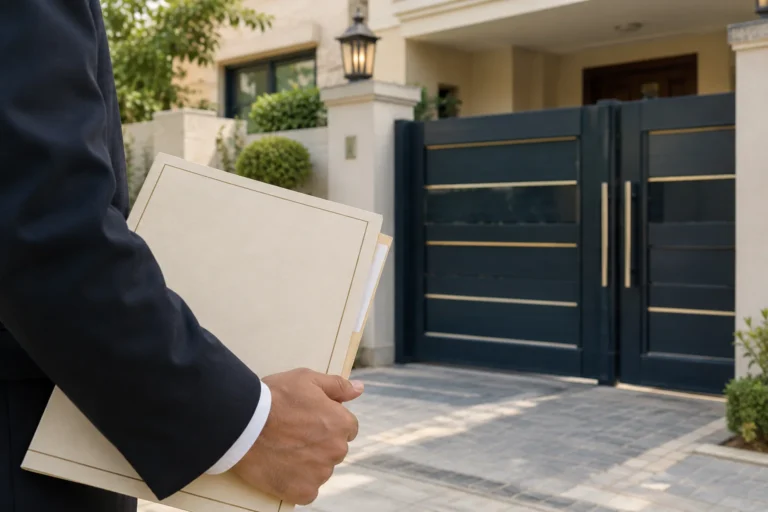
An illegal possession dispute generally involves disagreement over who has the lawful right to occupy or control a property.
The issue may involve a house, plot, land, commercial property or other immovable property. Resolving the dispute requires careful review of ownership records, possession history and the circumstances under which the current occupant entered or remained in possession.
Available title documents, registry records and land records are reviewed to understand the claimed ownership.
The history of possession is examined to understand who occupied the property and under what circumstances.
Any agreement, permission, tenancy, family arrangement or other basis claimed by the occupant is considered.
Where appropriate, legal proceedings may be considered to protect ownership or possession rights.
Every possession dispute depends on the ownership documents, history of occupation and conduct of the parties involved.
Rahat Saleem reviews the available evidence before advising on the appropriate legal course.
Documents establishing or supporting ownership are reviewed before considering further action.
The history of possession is examined, including how and when the current occupant entered the property.
Registry records, Fard, mutation documents, agreements and other relevant records may be reviewed.
Where the matter cannot be resolved through documentation or agreement, appropriate civil proceedings may be considered.
The legal approach depends on the ownership documents, nature of the occupation and whether any notice or court proceedings have already taken place.
Discuss the property, current occupant, ownership claim and circumstances leading to the possession dispute.
Review registry documents, sale deeds, Fard, mutation records or other documents supporting ownership.
Consider who previously occupied the property, when possession changed and whether permission or an agreement was involved.
Assess any tenancy, family arrangement, agreement, ownership claim or other basis relied upon by the person in possession.
Determine whether the matter concerns unauthorised occupation, refusal to vacate, competing ownership, tenancy, inheritance or another civil dispute.
Depending on the circumstances, the matter may involve a legal notice, negotiation, civil proceedings or another appropriate legal remedy.
The exact documents required depend on the property and nature of the possession dispute.
Not every matter requires every document. The relevant records should be identified according to the facts of the case.
Overseas Pakistanis may face possession disputes involving property located in Rawalpindi or elsewhere in Pakistan.
Rahat Saleem provides online consultation and document review for overseas clients dealing with possession-related matters.
Whether representation through an authorised person is appropriate depends on the circumstances and requirements of the particular matter.
Property ownership and physical possession are related but distinct matters.
Both ownership and possession records may therefore be important when assessing a dispute.
Possession disputes can arise in several different circumstances.
A person may occupy property without the permission or consent of the claimed owner.
A person who originally entered the property with permission may later refuse to vacate after that permission is withdrawn or expires.
Possession disputes may arise between family members or legal heirs concerning inherited or jointly held property.
A dispute may arise where a landlord and tenant disagree about continued occupation, termination or possession.
A person in possession may claim ownership based on a sale, gift, inheritance or other document that is disputed by another party.
An overseas property owner may discover that another person is occupying or controlling property in Pakistan without the authority the owner believes was granted.
The legal position depends on the documents and circumstances rather than the description of the occupation alone.
Not every refusal to vacate is necessarily treated in the same way as an unlawful occupation claim.
Where the occupant originally entered the property as a tenant, the matter may involve tenancy law, rent records, lease terms or termination requirements.
Relevant documents may include:
Rent or lease agreement
Rent payment records
Notices issued by either party
Correspondence concerning termination
Ownership documents
Possession records
The legal route should be selected according to the actual relationship between the parties.
Possession disputes may also arise where multiple legal heirs claim rights over inherited property.
Relevant issues may include:
Identification of legal heirs
Ownership shares
Inheritance mutation
Previous transfers
Possession by one or more heirs
Partition or distribution issues
Existing court proceedings
The family structure and inheritance records should be reviewed before determining the appropriate legal course.
Before taking legal action, it is important to understand both the ownership position and how the current occupant came into possession.
Important questions may include:
Who is the recorded owner?
What documents support the ownership claim?
Who currently occupies the property?
How did that person obtain possession?
Was permission ever given?Was there a tenancy or other agreement?
Has any notice already been issued?
Does the occupant claim ownership?
Are there existing court orders or proceedings?
The answers help determine the nature of the dispute and the appropriate legal response.
Legal advice and representation where competing claims exist regarding property ownership.
Guidance concerning tenancy, possession, rent and vacation of property.
Contact Rahat Saleem, Advocate High Court, for legal guidance and representation concerning alleged illegal possession, disputed occupation and property possession matters in Rawalpindi.
Clients from Islamabad may arrange a consultation at District Bar Rawalpindi. Online consultations are also available for overseas Pakistanis who need their ownership and possession records reviewed before taking further legal steps in Pakistan.
Legally reviewed by Rahat Saleem, Advocate High Court
Advocate High Court | District Bar Rawalpindi
Civil & Property Law Services – Rawalpindi
This page provides general information concerning illegal possession and property-possession disputes in Pakistan. It does not constitute legal advice for any particular property or dispute. Ownership rights, possession rights, documentary requirements and available remedies depend on the facts, property history, agreements, jurisdiction and applicable law.